
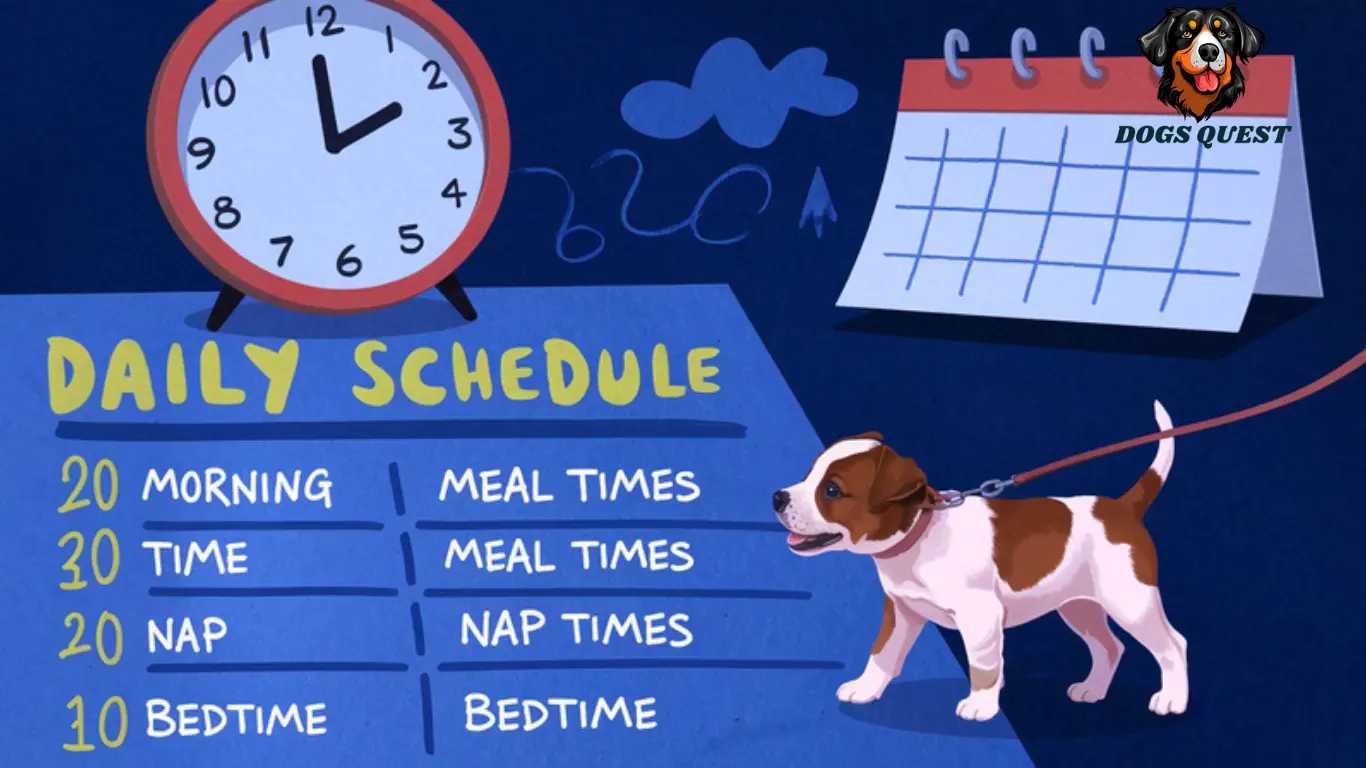
Learn the best puppy potty training schedule by age. Discover tips, routines, and expert advice to prevent accidents, speed up house training, and raise a happy, well-trained puppy.
Introduction
Bringing home a new puppy is one of life’s most exciting moments. Their wagging tails, playful energy, and endless curiosity bring so much joy—but they also bring new responsibilities. One of the first (and most important) lessons your puppy needs to learn is potty training.
A puppy potty training schedule is the key to success. Without structure, accidents happen often, which can be stressful for both you and your pup. With the right routine, patience, and consistency, you can teach your puppy to use the bathroom in the right spot—and set them up for a lifetime of good habits.
This guide will walk you through an age-by-age puppy potty schedule, tips for success, common mistakes to avoid, and answers to the most common potty training questions.
Why a Puppy Potty Training Schedule Matters
Puppies don’t automatically know when and where to go potty. They rely on you to guide them. A schedule helps:
- Create consistency → Puppies learn faster when routines are predictable.
- Prevent accidents → Regular bathroom breaks reduce the chances of indoor messes.
- Build confidence → When your puppy succeeds, they feel safe and secure.
- Strengthen your bond → Training builds trust and helps you communicate better.
Without a schedule, your puppy may get confused, leading to more accidents and frustration. With a little planning, you can avoid this and help your puppy become house-trained smoothly.
Puppy Potty Training Schedule by Age
Every puppy is different, but their bladder and bowel control generally improve as they grow. Here’s a breakdown of what to expect.
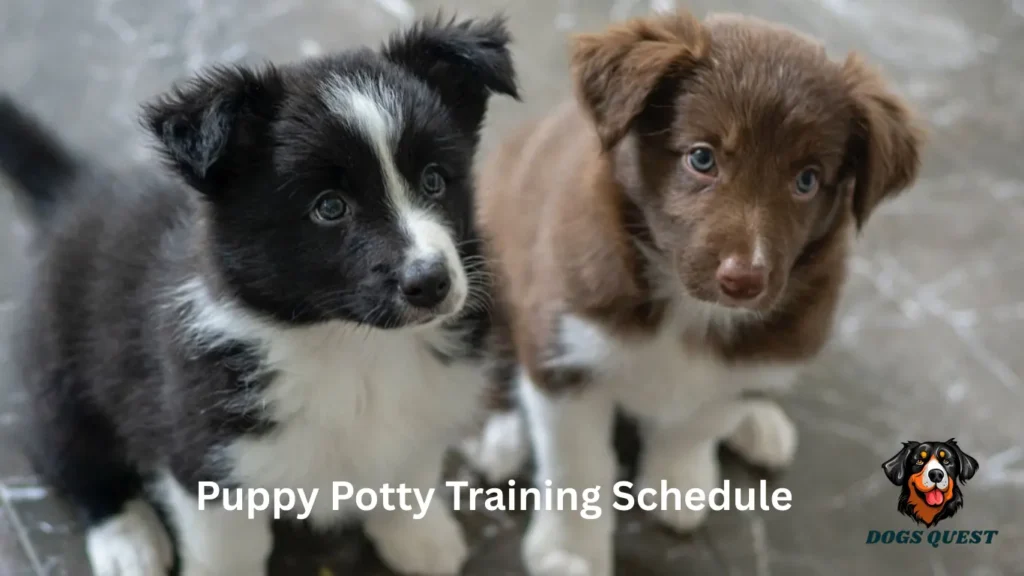
8–10 Weeks Old
At this age, puppies have tiny bladders and very little control. They’ll need to go every 2 hours, including right after eating, drinking, playing, or waking up.
- Take your puppy outside first thing in the morning.
- Schedule potty breaks every 2 hours.
- Always go outside after meals and naps.
- Use a consistent potty spot so they learn faster.
Pro Tip: Carry your puppy to the potty spot to prevent accidents on the way.
10–12 Weeks Old
Your puppy can now hold it for a little longer—around 2 to 3 hours.
- Stick to a routine of potty breaks every 2–3 hours.
- Crate training is very helpful at this stage.
- Watch for signs: sniffing, circling, whining, or heading to the door.
3–4 Months Old
By 12–16 weeks, puppies can usually wait about 3–4 hours between bathroom breaks.
- Take them out after every meal.
- Continue with bedtime potty trips.
- Limit free roaming indoors until they’re more reliable.
4–6 Months Ol
Your puppy is learning bladder control and can usually go 4–5 hours between breaks.
- Stick to a consistent schedule.
- Nighttime accidents should be fewer.
- Praise and reward every success.
6 Months and Older
By now, most puppies can “hold it” for up to 6–7 hours during the day.
- Potty breaks should be every 6 hours.
- Keep reinforcing good habits.
- Most puppies are fully potty trained by 6–12 months with consistency.
Sample Daily Puppy Potty Training Schedule

Here’s an example of what a structured day might look like:
- 6:30 AM → Wake up & go potty immediately
- 7:00 AM → Breakfast + potty break after eating
- 9:00 AM → Potty break after playtime
- 12:00 PM → Lunch + potty break
- 2:30 PM → Potty break
- 5:30 PM → Dinner + potty break
- 8:00 PM → Potty break after play
- 10:00 PM → Final potty trip before bed
- Nighttime (if under 4 months) → One quick potty break
Crate Training and Potty Schedule
A crate is one of the most effective tools for potty training. Puppies naturally avoid soiling where they sleep.
- Choose a crate just big enough for your puppy to stand, turn, and lie down.
- Never use the crate as punishment—it should feel like a safe space.
- Take your puppy out immediately after crate time.
Signs Your Puppy Needs to Go Pott
Pay attention to these common signs:
- Sniffing the floor or carpet
- Circling or pacing
- Whining or barking
- Moving toward the door
If you notice any of these, act quickly and take your puppy outside.
Nighttime Potty Training Tips
Night training takes extra patience:
- Avoid giving water 1–2 hours before bedtime.
- Take your puppy out right before sleeping.
- Set an alarm for one nighttime potty break if they’re under 12 weeks.
- Gradually extend the time between breaks as your puppy gets older.
Common Puppy Potty Training Mistakes to Avoid
Even the most caring owners sometimes make mistakes. Avoid these to speed up training:
- Inconsistent schedule → Skipping breaks confuses your puppy.
- Punishing accidents → This creates fear instead of teaching.
- Too much freedom too soon → Puppies should earn house privileges.
- Not rewarding success → Praise and treats motivate your pup to repeat good behavior.
- Expecting overnight success → Training takes weeks to months, not days.
Tips for Potty Training in Apartments
Apartment living comes with challenges, but it’s still doable:
- Use puppy pads or turf patches for emergencies.
- Stick to the same outdoor potty spot near your building.
- Allow extra time for elevators or stairs.
- Be patient—urban potty training usually takes a bit longer.
Final Thought
Potty training a puppy may feel overwhelming at first, but with the right puppy potty training schedule, patience, and consistency, your pup will learn quickly. Remember:
- Start training as soon as you bring your puppy home.
- Follow an age-appropriate potty schedule.
- Use crates, rewards, and routines to set your puppy up for success.
- Stay calm, and don’t stress over accidents—they’re just part of the process.
With love and consistency, you’ll soon enjoy a clean home and a happy, confident puppy who knows exactly when and where to go potty.
FAQs :
Q1 . How often should I take my puppy out to potty?
Young puppies need potty breaks every 2–3 hours. As they grow, they can hold it longer—up to 6–7 hours by 6 months old.
Q2 . What is the best potty training schedule for an 8-week-old puppy?
At 8 weeks, take your puppy out every 2 hours, including after meals, naps, and playtime.
Q3 . How long does it take to fully potty train a puppy?
Most puppies are potty trained within 4–6 months, though some may take up to a year depending on consistency and breed size.
Q4 . Should I use puppy pads or go straight to outdoor training?
Both methods work. Puppy pads are helpful for apartments or bad weather, but if possible, outdoor training is faster and clearer for your puppy.
Q5 . What should I do if my puppy keeps having accidents?
Stay calm, clean accidents with an enzymatic cleaner, and review your schedule. If accidents continue despite consistency, consult a vet to rule out medical issues.