Discover the top 10 powerful steps for successful conformation show training. Learn expert tips, NLP-based strategies, and proven methods to prepare your dog to win at conformation shows.
Conformation Show Training: 10 Powerful Steps to Win Big
If you’ve ever watched a dog strut proudly in a ring, flawlessly groomed, confidently posing while a judge evaluates every detail – you’ve seen the result of exceptional conformation show training.
Whether you’re a first-time handler or a seasoned breeder, mastering the art of conformation training is key to showcasing your dog’s best features, meeting breed standards, and increasing your chances of winning that coveted ribbon.
In this detailed guide, we’ll walk you through 10 powerful steps to get your dog ring-ready, with actionable tips, NLP-backed learning strategies, and LSI-rich terms to help your content shine. Let’s jump into the exciting world of conformation show training.
What is Conformation Show Training?
Before diving into techniques, let’s clarify what conformation show training actually is.
Understanding the Basics
Conformation shows, often called dog shows, are events where purebred dogs are judged on how closely they match their breed standard – a detailed description of the ideal specimen. These standards cover everything from structure and gait to coat texture and temperament.
Conformation show training is the process of preparing your dog to be presented in front of a judge, including grooming, stacking, gaiting, and behavioral training.
Why is Conformation Show Training Important?
It Highlights Breed Excellence
Your dog may have perfect genetics, but if they don’t stand, walk, or behave properly in the ring, they won’t get the recognition they deserve.
Builds Handler-Dog Communication
A major component of conformation show training is building trust and effective non-verbal communication between handler and dog.
Sets the Stage for Championship Titles
Without proper training, achieving champion status in organizations like the AKC, UKC, or FCI is nearly impossible.
Step 1: Know Your Breed Standard
Every breed has a different standard. Before beginning any conformation show training, study your breed’s official standard from your kennel club.
Key Points to Focus On:
- Head shape and expression
- Gait (movement)
- Body proportions
- Coat color and type
- Temperament
This knowledge will inform your training goals and grooming style.
Step 2: Start Training Early
Puppies can begin basic conformation show training as early as 8–10 weeks.
Early Focus Areas:
- Socialization with people and dogs
- Comfortable being handled by strangers
- Standing still for short periods
- Introduction to lead and collar
Puppy exposure to show environments builds confidence and reduces fear.
Step 3: Teach the Stack
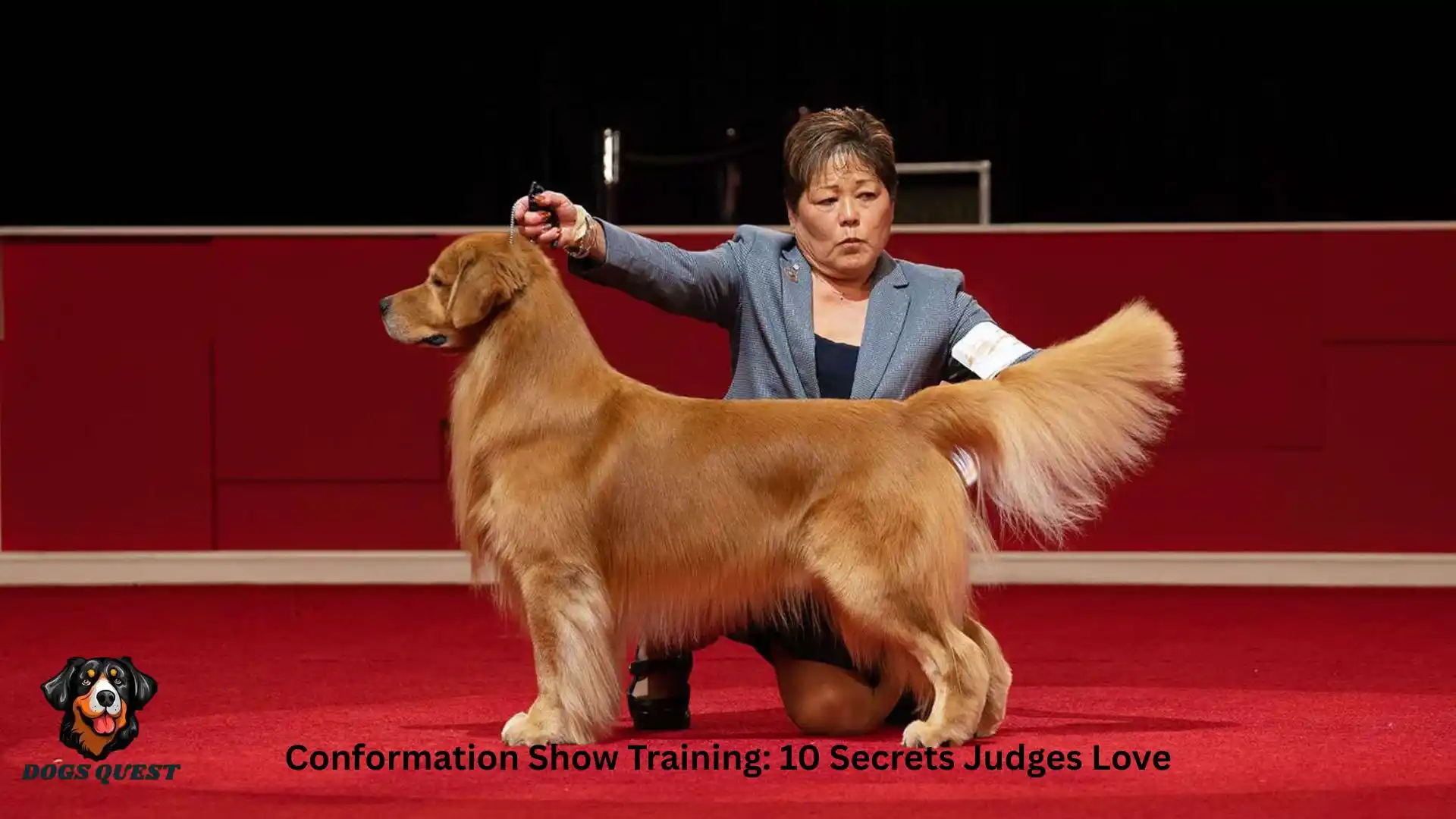
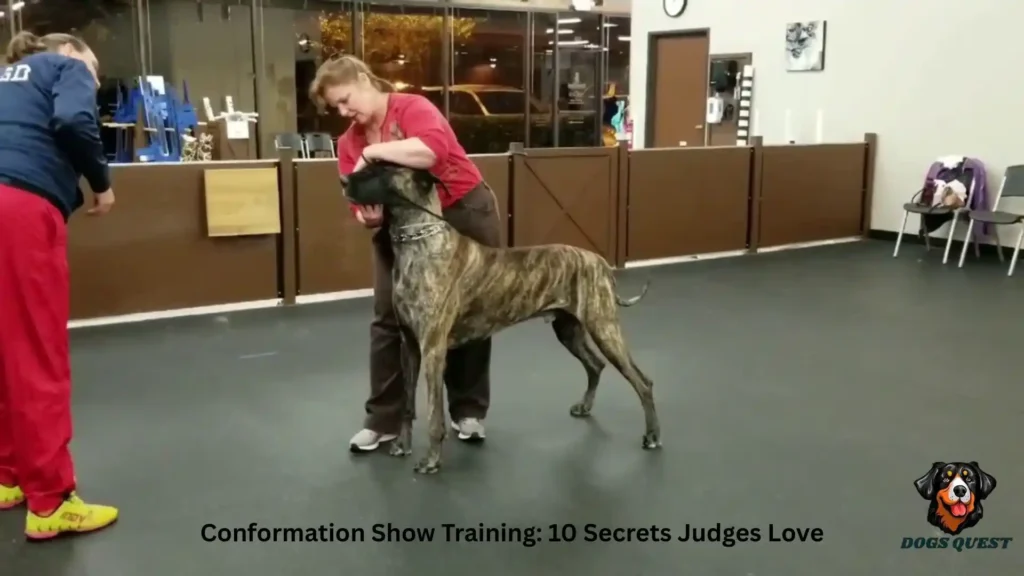
The stack is the pose your dog holds while being judged. It shows off their structure and posture.
Free Stack vs. Hand Stack:
- Free Stack: Dog positions themselves naturally
- Hand Stack: Handler manually places legs and body
How to Teach It:
- Use treats or clicker training
- Practice in front of mirrors
- Start on a stable surface like a grooming table
Stacking is one of the most crucial aspects of conformation show training and should be practiced daily.
Step 4: Perfect the Gait
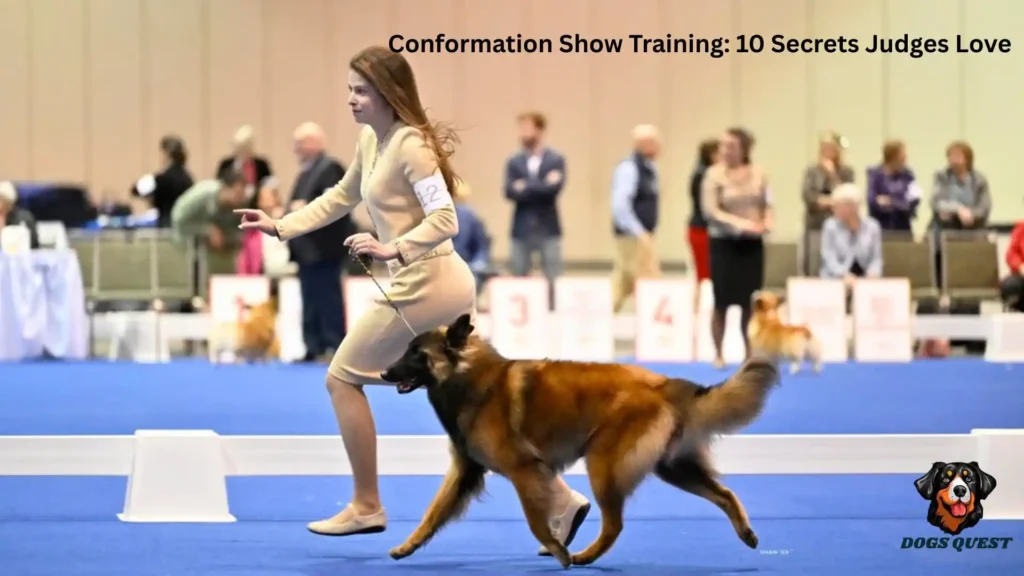
Judges evaluate your dog’s movement, so proper gaiting is essential.
Tips for Gait Training:
- Use a loose lead for natural movement
- Keep the pace even – not too fast or slow
- Practice in a straight line and circles
- Watch for crabbing or pacing
A smooth, confident gait shows off balance, coordination, and structural soundness.
Step 5: Condition for Ring Readiness
Physical conditioning is often overlooked in conformation show training.
Build Strength and Stamina:
- Regular walks and controlled jogs
- Treadmill sessions (for experienced dogs)
- Core strengthening exercises
- Swimming or hydrotherapy
Grooming for Ring Appeal:
- Regular brushing and bathing
- Nail trimming
- Dental hygiene
- Breed-specific grooming styles
Dogs must look their absolute best in the ring – both in condition and presentation.
Step 6: Desensitize to the Show Environment
Conformation shows are loud, crowded, and full of distractions. Your dog needs to remain calm and focused.
Exposure Ideas:
- Visit local dog shows
- Train in busy parks or pet stores
- Invite friends to mimic judges touching your dog
Focus on confidence building, not just obedience. A confident dog performs better under pressure.
Step 7: Use Positive Reinforcement Techniques
NLP (Neuro-Linguistic Programming) principles apply here: consistent, positive associations shape behavior.
Tools for Success:
- Clicker training
- Verbal markers like “yes!”
- High-value treats
- Consistent body language cues
This NLP-backed strategy enhances the dog’s ability to learn and generalize tasks during conformation show training.
Step 8: Learn Ring Etiquette
Handlers also need ring training. Knowing how to behave, where to stand, and how to show your dog professionally is just as critical as dog preparation.
Handler Etiquette Basics:
- Always face the judge
- Keep your dog between you and the judge
- Stay calm and confident
- Watch for judge’s signals
A well-prepared handler makes conformation show training effective and polished in the ring.
Step 9: Practice Mock Shows
Before your first real competition, simulate the experience.
Create Realistic Practice:
- Use friends as judges
- Set up a ring layout
- Wear your show attire
- Use ring mats for authentic footing
Mock shows reduce stress and allow you to troubleshoot issues before stepping into a real competition.
Step 10: Stay Consistent and Patient
Consistency is the backbone of successful conformation show training.
Track Your Progress:
- Use training journals
- Record videos of sessions
- Celebrate small wins
Remember, every champion was once a beginner. Stay motivated and trust the process.
Additional Tips for Success
Join a Local Dog Club
Being around other handlers offers valuable learning and mentorship.
Work with a Professional Handler
If you’re serious about winning, consider hiring or shadowing a professional who can give you personalized feedback.
Attend Workshops and Seminars
Breed clubs often host training events focused on conformation show training, ring strategy, and breed-specific handling.
Common Mistakes in Conformation Show Training
Avoid these errors that can hinder your success:
- Overtraining or pressuring your dog
- Ignoring breed-specific nuances
- Not addressing behavioral issues
- Inconsistent cues or commands
- Using outdated training methods
Staying informed and adaptable is essential to long-term success.
Tools & Equipment You’ll Need
Here are some essentials for conformation show training:
- Show lead and collar
- Grooming table
- Mirror or stacking blocks
- High-value treats
- Crate for downtime at shows
- Travel grooming kit
Having the right tools can streamline your preparation and boost your dog’s confidence.
Benefits Beyond the Ring
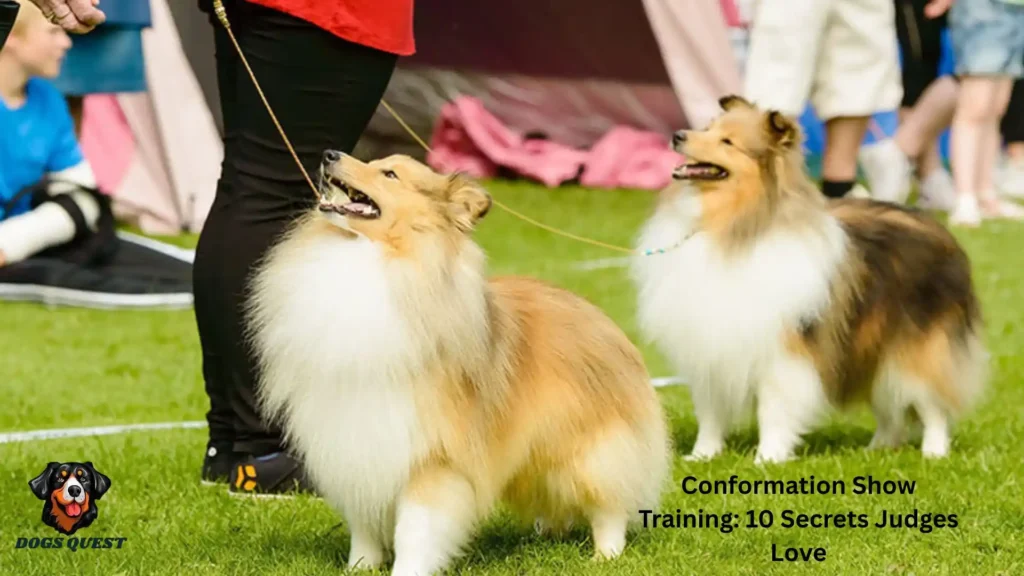
Conformation show training isn’t just about ribbons and titles.
It Also Builds:
- Stronger handler-dog relationships
- Increased canine confidence
- Public presentation skills
- Breed advocacy and education
Even if you don’t win every show, the training process creates a well-rounded, well-behaved companion.
Final Thoughts
Conformation show training is a rewarding journey that combines structure, patience, and love. When done right, it not only helps your dog shine in the ring but also strengthens your bond and creates lasting memories.
Start small, stay consistent, and remember: every champion started with a single stack.
Frequently Asked Questions
Q1: How long does conformation show training take?
It varies by breed and individual temperament, but 3–6 months of consistent practice is a good start.
Q2: Can any purebred dog compete?
Yes, if they are registered with a recognized kennel club and are intact (not spayed/neutered in most organizations).
Q3: Is professional handling required?
Not necessarily, but it can be helpful for highly competitive shows or novice handlers.